

Last updated
11 min readfirst-home-buyerHow to buy in Bulimba without a 20% deposit
Bulimba's median house price sits at around $2.1 million with annual capital growth near 9.8% (Cotality / CoreLogic suburb data, 2026), making a standard 20% deposit roughly $420,000. Six paths exist for buyers without that cash on hand — family pledge, Bank of Mum and Dad, LMI lenders, government schemes, co-buying, and SMSF deposits.
The short version (TL;DR)
Bulimba's median house price is around $2.1 million (CoreLogic / Cotality, early 2026), so a textbook 20% deposit is roughly $420,000. For most first-time buyers and many upgraders, that number is the wall. There are six legitimate ways through it: a family pledge, a parental gift (Bank of Mum and Dad), an LMI-friendly lender accepting 5-15% deposit, government schemes (FHBG, FHSS, Help to Buy), co-buying with another party, and SMSF-funded structures. Each has different costs, risks and lender pools.
If you're trying to work out which one fits your situation, a 30-minute coffee is the cheapest way to map the options against the actual numbers.
The plain English version
A $2.1 million Bulimba purchase needs around $420,000 in deposit if you want to avoid Lender's Mortgage Insurance, plus roughly $100,000 in stamp duty and legal costs depending on your circumstances. That's around $520,000 in cash before you've turned a key.
For most buyers, that's not realistic in one step. The good news is that the "20% deposit" framing is a textbook ideal, not a requirement. Six paths get buyers in with less.
1. Family pledge
A parent uses equity in their own property as additional security on the buyer's loan. The buyer typically still contributes 5-10% of the deposit; the parent's equity covers the gap. The pledge is released once the loan amortises down enough that the bank no longer needs the additional security — usually 5-10 years.
2. Bank of Mum and Dad (gifted deposit)
A direct gift from family. Lenders treat genuinely gifted deposits differently to loans — there's documentation around demonstrating the funds aren't repayable. Tax and Centrelink implications may apply on the giver's side; worth getting accountant advice.
3. LMI-friendly lender
Most lenders will accept a 5-15% deposit, charging Lender's Mortgage Insurance to cover their risk. LMI is a one-off premium that can be added to the loan. Costs $20,000-$50,000 depending on loan size — meaningful, but often significantly less than waiting years to save the gap.
4. Government schemes
The First Home Guarantee (5% deposit, government guarantees the LMI gap), First Home Super Saver Scheme (using super contributions toward your deposit), and Help to Buy shared equity scheme. Each has eligibility caps that may or may not apply at Bulimba's price points.
5. Co-buying
Two or more parties on title, sharing both the deposit and the loan. Most common with siblings or close friends. Adds legal complexity (co-ownership agreements, exit terms) but doubles the deposit-saving capacity.
6. SMSF-funded deposit
Rare for standalone residential, more common for commercial. Structurally complex — see the SMSF property loans piece for the rule set.
If you're working out which path fits, the first conversation is free. We typically map all six against your numbers and tell you which two or three are realistic.
The detail (for those who want it)
Why the 20% rule exists at all
The 20% deposit rule isn't a regulation. It's the threshold at which lenders waive Lender's Mortgage Insurance — the insurance the lender takes out (and you pay for) to protect themselves against you defaulting in the early years of the loan, when your equity buffer is thin.
The rule exists because lenders' loss data shows that LVRs above 80% carry materially higher default loss exposure. LMI is the mechanism that makes lending at higher LVRs commercially viable.
That means there's nothing technically wrong with buying at a higher LVR. The borrower pays LMI, which makes the loan more expensive. The 20% framing is a guideline, not a rule.
Path 1 — family pledge in detail
The most common structure when a parent has substantial equity and wants to help. The parent doesn't transfer cash; they let the lender take a second mortgage over their property to cover the gap between your deposit and the standard 20%.
Worked example: you're buying at $1.5 million with $150,000 saved (10%). Standard would require $300,000 (20%). Your parent's home, valued at $1.8 million with no debt, has the equity to cover the $150,000 gap. The lender registers a second mortgage on the parent's property for $150,000. Your loan is now structured as 80% LVR overall (including the pledge).
When the loan amortises down enough that your share of equity covers the original gap — typically 5-10 years — the parent requests the pledge release. The bank revalues, confirms you're now at 80% LVR or below on your property alone, and discharges the second mortgage on the parent's home.
Path 2 — Bank of Mum and Dad (gifted deposit)
A direct gift. Lenders require documentation that the funds are a gift, not a loan, typically via a statutory declaration from the giver.
The structure is simpler than a family pledge but the giver bears the upfront cost rather than contingent risk. For the giver, that means immediate liquid cash leaves their balance sheet. For the receiver, no parent guarantor sitting behind the loan means the loan is fully their own.
Tax implications can apply on the giver's side depending on the source of funds (e.g. drawn from an investment property's equity, drawn from super, etc.). Centrelink implications can apply if the giver is on or near pension eligibility — Centrelink's gifting rules count gifts above $10,000 in any year (or $30,000 over five years) against the asset and income tests.
Path 3 — LMI-friendly lender
Many major lenders accept 5-15% deposits, charging LMI to bridge the gap. Premiums vary by lender, by loan amount, by your LVR.
For a $1.5 million purchase with 10% deposit ($150,000), LMI typically lands somewhere between $25,000 and $40,000 depending on the lender. The premium can usually be capitalised — added to the loan rather than paid upfront — which spreads the cost but means you're paying interest on the LMI for the loan's life.
Some lenders are noticeably more LMI-friendly than others — different LMI providers, different scaling formulas, different LVR caps for specific borrower types (medical professionals and some other categories often get LMI waivers at 90% LVR with the right lender).
Path 4 — government schemes
Three current schemes apply to Bulimba's price band selectively:
First Home Guarantee (FHBG): the federal government guarantees the LMI gap for eligible first-home buyers with 5% deposit. Bulimba's price point is above the standard FHBG property price cap for Brisbane (around $750,000-$1m depending on regional zone) so this doesn't apply for most Bulimba purchases.
First Home Super Saver Scheme (FHSS): allows first-home buyers to make voluntary super contributions and withdraw them later for a deposit. Tax-effective. Caps apply.
Help to Buy: a shared equity scheme where the federal government takes an equity share in the property, reducing the buyer's deposit and loan needs. Property price caps may apply at Bulimba's level.
The schemes are useful but the price caps mean Bulimba purchases often sit outside eligibility. Worth checking the current thresholds on the government's MoneySmart site.
Path 5 — co-buying
Two or more parties on title, sharing the deposit and the loan. Most commonly siblings, sometimes close friends. Doubles the deposit-saving capacity but adds legal complexity.
Things that need agreement upfront:
- Ownership shares (joint tenants vs. tenants in common, with what percentages)
- Who lives in the property (if not all owners)
- How costs are shared (loan repayments, rates, maintenance, capital improvements)
- Exit terms (what happens if one party wants out — buy-out mechanism, valuation method)
- What happens if one party defaults on their share
Co-buying without a written agreement is a structurally bad idea. The legal cost of getting an agreement drafted ($2,000-$5,000) is small compared to the cost of resolving a dispute later.
Path 6 — SMSF-funded deposit
Possible but structurally complex. Your own SMSF cannot lend to you for residential purposes. There are some narrow scenarios where SMSF structures can interact with deposit funding (e.g. an SMSF buying commercial property that's then leased to your operating business at arm's length), but these are commercial, not residential.
If you're considering SMSF involvement in property, see the SMSF property loans piece for the structural rules.
Stamp duty — the cost most buyers underestimate
For a $2.1 million Bulimba purchase, Queensland stamp duty for owner-occupiers (no first-home concession at this price point) lands around $95,000 (Queensland Revenue Office calculator). Plus legal, building and pest, transfer fees and other costs typically pushing the total transaction cost above $100,000 — separate from the deposit.
First-home buyers may qualify for stamp duty concessions, but the QLD eligibility caps (currently around $500,000 for full concession, sliding to $550,000 for partial) sit well below Bulimba prices. The concessions are real for buyers in lower-priced suburbs; they don't typically apply to Bulimba.
Buffer matters more than people realise
The single most common mistake at the planning stage isn't underestimating the deposit. It's underestimating the buffer needed beyond the deposit:
- Stamp duty + legal + transfer ($90k-$100k for Bulimba)
- Building and pest, conveyancing, lender fees
- Moving and immediate post-settlement costs (utility connections, urgent repairs)
- A 3-6 month repayment buffer for unexpected income disruption
A buyer with $400,000 in cash isn't a $400,000 deposit buyer. They're roughly a $250,000-$300,000 deposit buyer with $100,000-$150,000 absorbed by the rest of the cost stack. Planning around the deposit alone is the recipe for a tight settlement.
Where the conversation usually starts
Most first conversations are some version of "we have $X saved, we want to buy at $Y in Bulimba — what's possible?" The honest answer requires looking at your full income, debt, expense and lifestyle picture, not just the deposit number. The first conversation is 30 minutes, no obligation. Book one with Danny or call him on 0423 161 855.
More from Danny



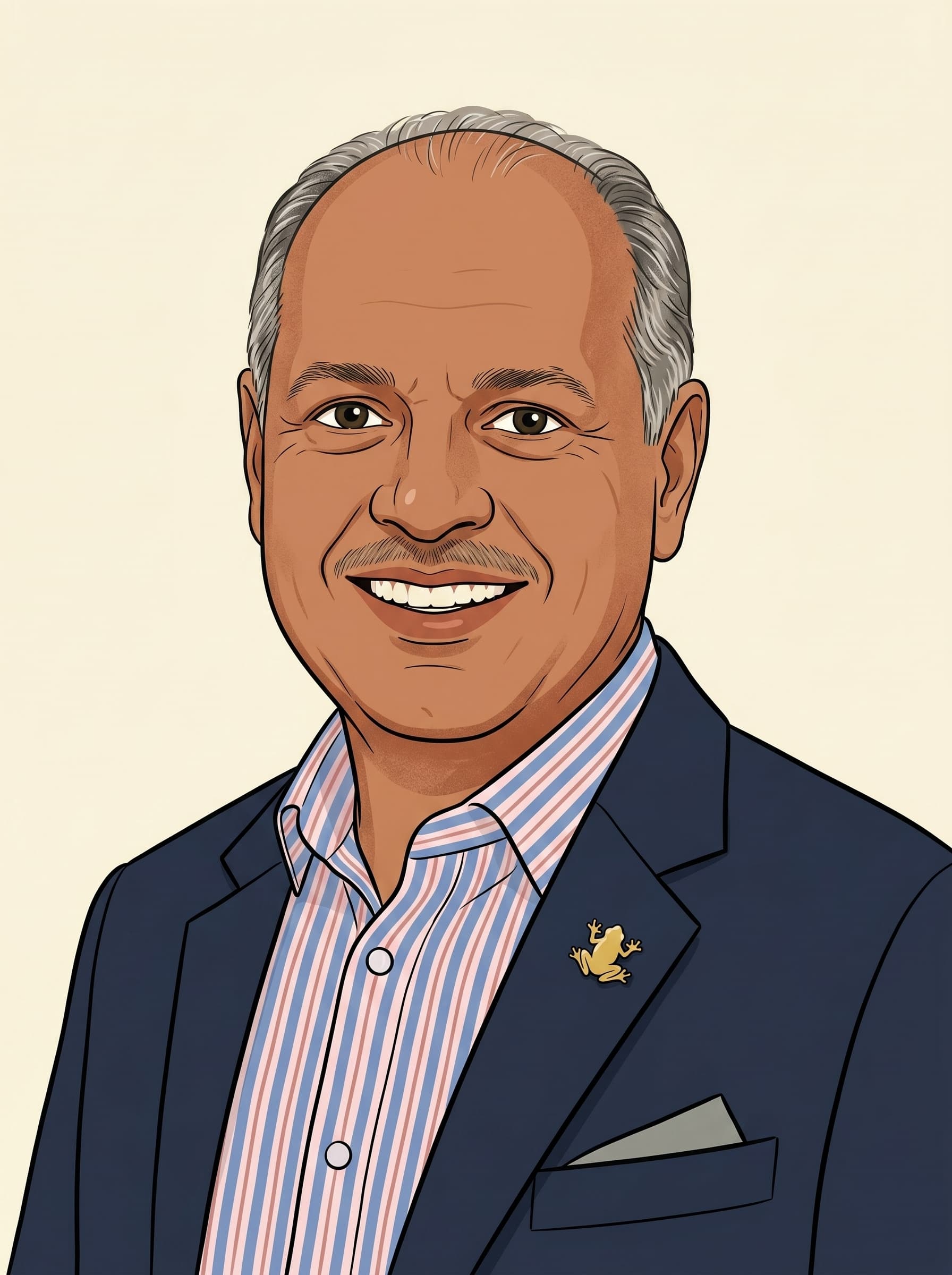
Danny Naidoo
Danny Naidoo, Credit Representative under Australian Credit Licence 486112, mortgage broker in Bulimba, Brisbane.
Want to talk about this?
Thirty-minute first conversation, no obligation. Coffee on Oxford Street or video — whatever suits your week.
Book a coffee with DannyOr read more about Danny as a Bulimba mortgage broker.