

Last updated
10 min readrefinancingShould you refinance in 2026? A ten-minute Bulimba checklist
With the RBA cash rate at 4.10% (March 2026) and the average variable home loan rate around 6.65%, the gap between back-book and front-book pricing remains structural. A ten-question check tells you whether refinancing, a retention call, or staying put is the right move.
The short version (TL;DR)
The RBA cash rate sits at 4.10% as of March 2026 (RBA Cash Rate Target) and the average advertised variable home loan rate sits around 6.65%. Existing borrowers typically pay above what their lender quotes new customers — a structural gap that the ACCC's last comprehensive study (Home Loan Price Inquiry, November 2020) documented in detail and which the RBA's April 2024 Bulletin confirmed has persisted through subsequent rate cycles. A ten-minute check across ten questions tells you whether refinancing makes sense, whether a retention call to your existing lender solves it for less effort, or whether (more often than the industry admits) staying put is actually the right call once exit costs are netted out.
If you'd rather have someone walk through the ten checks with you, a 30-minute coffee is the cheapest way.
The plain English version
The most comprehensive Australian study of the back-book vs front-book pricing gap remains the ACCC's 2020 Home Loan Price Inquiry. As of September 2020 it documented an average gap that grew with loan tenure:
- 0.29% for loans under 1 year old
- 0.47% for loans 1–3 years old
- 0.58% for loans 3–5 years old
- 0.71% for loans 5–10 years old
- 1.04% for loans over 10 years old
ACCC and ASIC haven't re-published a comprehensive gap study since, so the precise 2026 numbers aren't quotable. The structural pattern hasn't gone away — the RBA's April 2024 Bulletin found that only around 75% of cash-rate movements during the 2022–2023 tightening passed through to existing mortgages, vs around 90% in earlier cycles, leaving a measurable wedge between existing and new pricing. Refinancing isn't a binary "yes/no" — it's a set of conditions. When several line up, switching captures the gap. When they don't, the discharge fees, application costs and cashback chasing leave you worse off.
Here are the ten quick checks. If you can answer five or more "yes," refinancing is worth a real conversation. If you answer two or fewer, you're probably better off calling your existing lender's retention team or staying put.
The ten checks
- Has your loan been with your current lender 24+ months?
- Is your current rate 0.30%+ above the published new-customer rate at the same lender?
- Is your loan-to-value ratio (LVR) under 80%?
- Is your credit profile clean (no missed repayments in 24 months)?
- Has your income stayed stable or grown?
- Are exit costs (discharge, settlement, new application, valuation) under 6 months of expected savings?
- Are you not on a fixed rate that costs more to break than the refinance saves?
- Are you happy with cashback offers being short-term sweeteners rather than the deciding factor?
- Are you willing to deal with discharge admin (which takes 4-6 weeks)?
- Do you have a clear use for the savings (rather than refinancing to "feel productive")?
If you've ticked most of these, the next move is a side-by-side comparison. If you've ticked few, the retention play (which we'll explain in the detail section) usually solves it for less effort.
If you're not sure where you sit, the first conversation is free.
The detail (for those who want it)
The pattern that drives most refinances
Lenders publish two rate sheets in practice. The first is what they advertise to new customers — competitive, often with cashback or fee waivers. The second is what their existing customers are paying, usually higher.
The most comprehensive Australian study to put numbers on this remains the ACCC's Home Loan Price Inquiry Final Report (November 2020). As of September 2020, it found the average rate differential between new and existing variable-rate customers was 0.29% in the first year of a loan, rising steadily to 1.04% for loans more than ten years old. ACCC and ASIC haven't re-published a comprehensive gap study since, so quoting the 2020 figures as today's exact gap would overstate certainty. The structural pattern, though, has been confirmed in subsequent RBA work — Cash Rate Pass-through to Outstanding Mortgage Rates (April 2024) found around 75% of cash-rate movements passed through to outstanding mortgages during 2022–2023, compared with closer to 90% in earlier tightening cycles. The wedge between back-book and front-book remains real.
This isn't malicious; it's how customer acquisition vs. retention economics work in retail banking. New-customer rates are an acquisition cost; existing-customer rates are the margin recovery.
The structural opportunity is that any borrower paying the second rate sheet can usually move to the first rate sheet — either by switching to a different lender, or by calling their current lender's retention team and asking explicitly for the new-customer rate. The retention call works more often than people expect.
Check 1 — has your loan been with your current lender 24+ months?
The first six months of any loan, lenders typically don't apply rate creep. The drift starts in years two and three when fixed-rate periods roll off, when promotional rates expire, and when general rate cycles widen the gap.
If you've been with your lender under 24 months, your rate is likely close to current new-customer pricing. Refinance economics may not work yet.
Check 2 — is your rate 0.30%+ above the published new-customer rate?
The single most important number in the ten. If your rate is identical to or below the lender's current new-customer rate, the refinance economics are weak. If you're 0.30-0.50% above, savings start being meaningful. If you're 0.50%+ above, savings are large enough that exit costs are easily covered.
To check: look up your lender's current new-customer variable rate for an 80% LVR owner-occupier (or whatever matches your file). Compare to your current rate. With the average advertised variable rate sitting around 6.65% in early April 2026, the typical "should I refinance?" gap shows up when an existing borrower's rate is 7.00% or higher.
Check 3 — LVR under 80%?
Below 80% LVR you have a much wider lender pool and avoid Lender's Mortgage Insurance on the new loan. Above 80% LVR, refinancing typically requires paying LMI again on the new loan — an additional cost that often defeats the point.
If your LVR is between 80% and 90%, refinancing is possible but the LMI cost has to be netted out of the rate savings. Above 90%, the economics rarely work.
For Bulimba homeowners, the steady price growth over the past five years has pushed many existing borrowers' LVRs well below 80% even without significant principal repayment — pure value growth has done the deleveraging. That makes refinancing easier than it would have been three years ago.
Check 4 — clean credit?
Any missed repayment, default, or significant late payment in the past 24 months will show up on your credit file and narrow your lender pool. Refinancing on impaired credit is possible but the lender pool is specialist-only and the rates are higher than your current loan typically.
If your credit is clean, you have full lender choice. If it's not, the conversation shifts from "rate optimisation" to "what's actually achievable."
Check 5 — income stable or grown?
Refinancing requires re-passing the lender's serviceability test. If your income has dropped since your original loan was approved, you might fail to qualify for the same loan amount you currently hold.
This catches some borrowers off-guard, especially those who've had a parent stop work or a household income reduction. The current loan was approved on the old income; the refinance application gets re-tested on the new income.
Check 6 — exit costs under 6 months of savings?
The maths that decides whether refinancing actually works.
Exit costs typically include:
- Discharge fee from current lender ($300-$500)
- Settlement and registration fees ($300-$600)
- Application and valuation costs at new lender (often waived but not always)
For a $1 million loan moving from 6.95% to 6.60% (a 0.35% drop), monthly savings are around $200. Annual savings: $2,400. Six months of savings: $1,200. Total exit costs are usually $600-$1,500 depending on lender and circumstances. So the payback period is usually 3-7 months.
If your loan is smaller or your rate gap is narrower, the payback can be longer — and the savings are no longer compelling.
Check 7 — fixed-rate break costs
Breaking a fixed-rate loan partway through the term can trigger break costs that wipe out years of savings. The break cost depends on how rates have moved since the fix was set; if rates are higher now than when you fixed, the break cost is small. If rates are lower now than when you fixed, the break cost can be large.
For Bulimba homeowners holding fixed-rate loans set during the 2021-2023 low-rate window, breaking can be expensive. The honest advice is usually: ride out the fix, then refinance.
Check 8 — cashback offers in perspective
Many refinance offers in 2026 still include cashback ($2,000-$5,000 from the new lender). These are real but they're a one-off; the rate is what compounds.
A loan offered with a $4,000 cashback at 6.75% is structurally worse than one offered at 6.55% with no cashback over a five-year horizon. The rate-vs-cashback math favours rate every time on loans held more than 18-24 months.
Use cashback as a tiebreaker between two rate-equivalent options, not as the deciding factor.
Check 9 — discharge admin tolerance
Switching lenders takes 4-6 weeks of paper-shuffling. Title transfers, settlement coordination, direct debit redirection, BPAY references, account closures. None of it is hard but all of it requires attention.
If you're in the middle of a job change, a property purchase, or any other life event that's already absorbing administrative bandwidth, the right time to refinance might be in three months, not now.
Check 10 — clear use for the savings?
Sometimes refinancing is a "feel productive" exercise rather than a directed financial move. The savings exist; the use of those savings is unclear; the cycle repeats in 18 months.
If you have a clear use — directing the saved repayment into the offset account, into super contributions, into paying down higher-interest debt elsewhere — refinancing has structural value beyond the rate. If you don't have a clear use, the savings often get absorbed into general spending and you're back to the same total cash position.
When the answer is "stay put"
This is the framing the industry rarely emphasises. Sometimes the right call is none of the above.
Examples:
- You're 18 months into a fixed-rate period set at 5.49%; rates today are around 6.65% and break costs would be punitive
- You've been at the lender 8 months on a competitive rate already
- Your credit profile took a hit recently and you wouldn't pass the new application
- You're planning a property purchase or restructure in 6 months that would override any current refinance
In any of these scenarios, refinancing now adds work for no benefit. Sometimes the most useful broker conversation is "stay put for now, revisit in six months."
What the first conversation usually covers
We pull your current loan structure and rate, check the same lender's published new-customer rate, calculate what a refinance to two or three competitive lenders would actually save (with exit costs included), and give you a clear answer: refinance, retention call, or hold.
Often the answer is the retention call. Often that conversation alone saves clients 0.20-0.40% without any paperwork beyond a phone call.
Still wondering if refinancing makes sense for you? The most useful thing is usually a 30-minute coffee. Book one with Danny or call him on 0423 161 855.
More from Danny

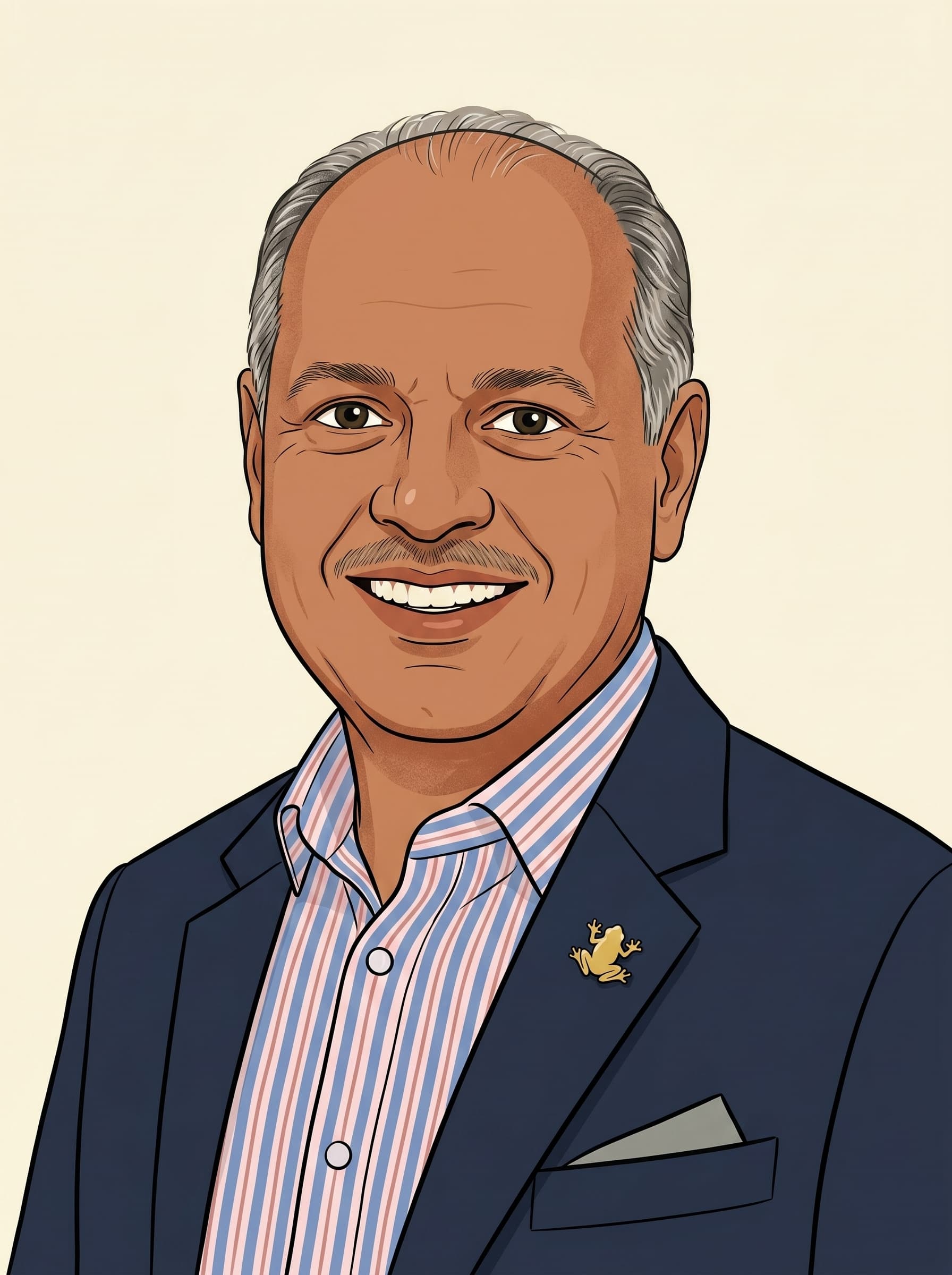
Danny Naidoo
Danny Naidoo, Credit Representative under Australian Credit Licence 486112, mortgage broker in Bulimba, Brisbane.
Want to talk about this?
Thirty-minute first conversation, no obligation. Coffee on Oxford Street or video — whatever suits your week.
Book a coffee with DannyOr read more about Danny as a Bulimba mortgage broker.